Work / act iv / Kadeya
Kadeya
A waste-free beverage vending station for frontline workers. I own marketing and sales across both sides of the business: B2B to the enterprises that buy the stations, and B2C to the workers who use them every shift.
- Years
- 2023 – now
- Role
- VP, Head of Growth. Promoted from Director of Marketing.
- I own
- Marketing and sales, B2B and B2C: brand and positioning, demand generation, the sales function, revenue, RevOps and CRM, lifecycle and loyalty, and fundraising support
- I partner on
- UX and UI and user-centred design research with the product team, across the station, the app and the bottle-return loop
- Stage
- Seed-stage B2B2C climate tech, Chicago
- Capability
- Brand · Growth & GTM · Fundraising · Lifecycle & loyalty · UX/UI & user-centred design · Content · Tooling & AI
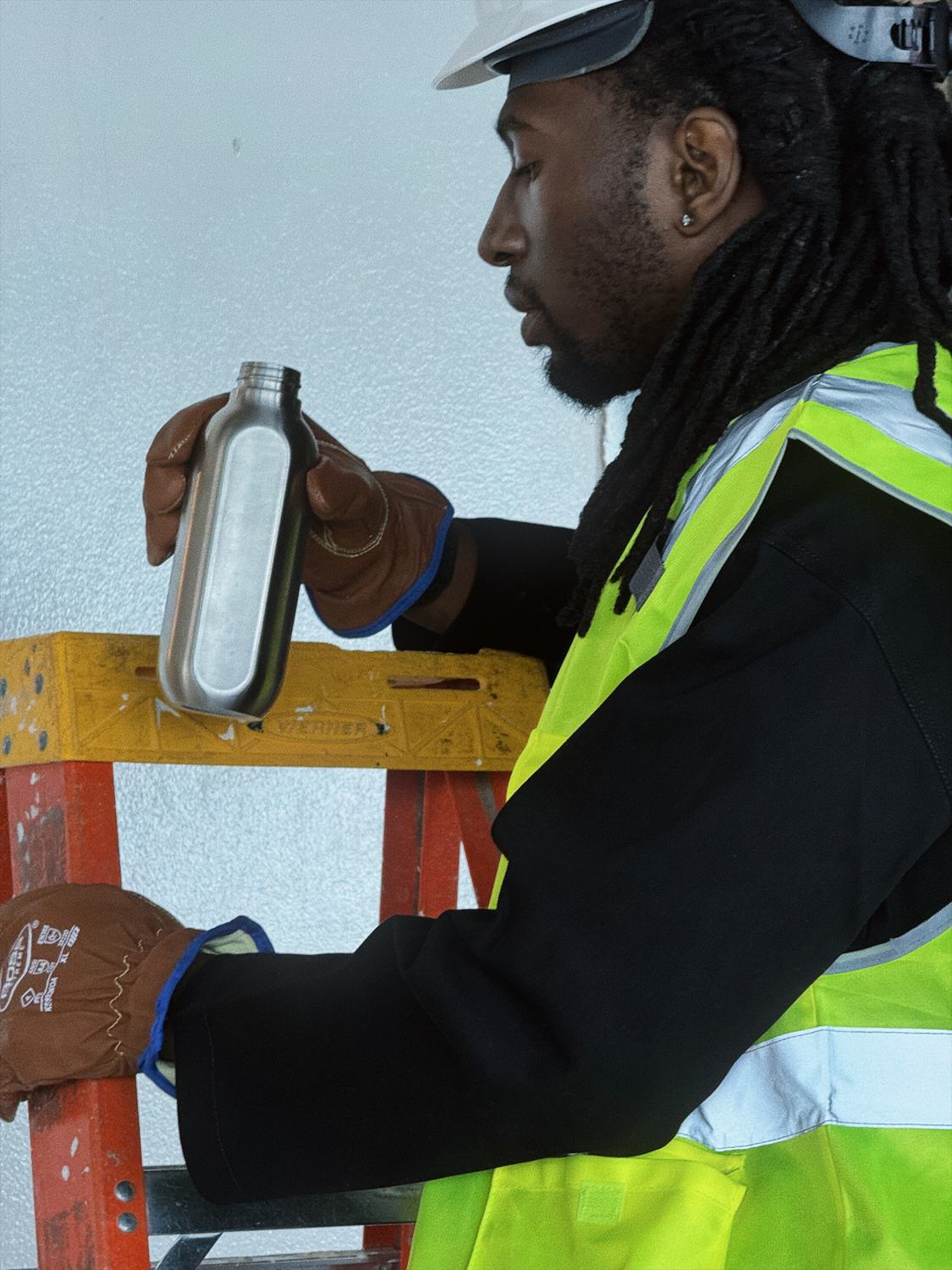
Kadeya · on site
What I own
Everything commercial at Kadeya runs through me, on both sides of the business.
B2B is the enterprise sale: construction and manufacturing buyers, food and beverage services operators, long cycles and procurement. B2C is the worker who walks up to the station on a Tuesday and decides whether to come back. Brand, demand generation, sales, revenue and the RevOps and CRM underneath all of it, for both.
At a company this size, owning the growth function means running it, so I am setting the strategy and also in the CRM on a Tuesday afternoon.
The mandate has widened over three years. It now includes the parts of the experience that decide whether a customer comes back: UX and UI across the station and the app, the user-centred design research behind both, and the lifecycle and loyalty programme that gets bottles returned. I do not own the product, but I am in the room for it, and the research that shaped it came out of my team.
Kadeya, in use
Where it started
I came in as Director of Marketing to a company with a real product and a brand that undersold it. The identity read as an early-stage tech startup, which made partnership conversations awkward and put a ceiling on what buyers thought the thing was worth. Surveys put the perceived value of a station more than 90% below what it actually cost to build.
There were brand guidelines, but the team said they did not know how to use them. Underneath that was a harder problem: the company had never pinned down what it was at its core. Fixing that was the first chapter of the role, not the job description.
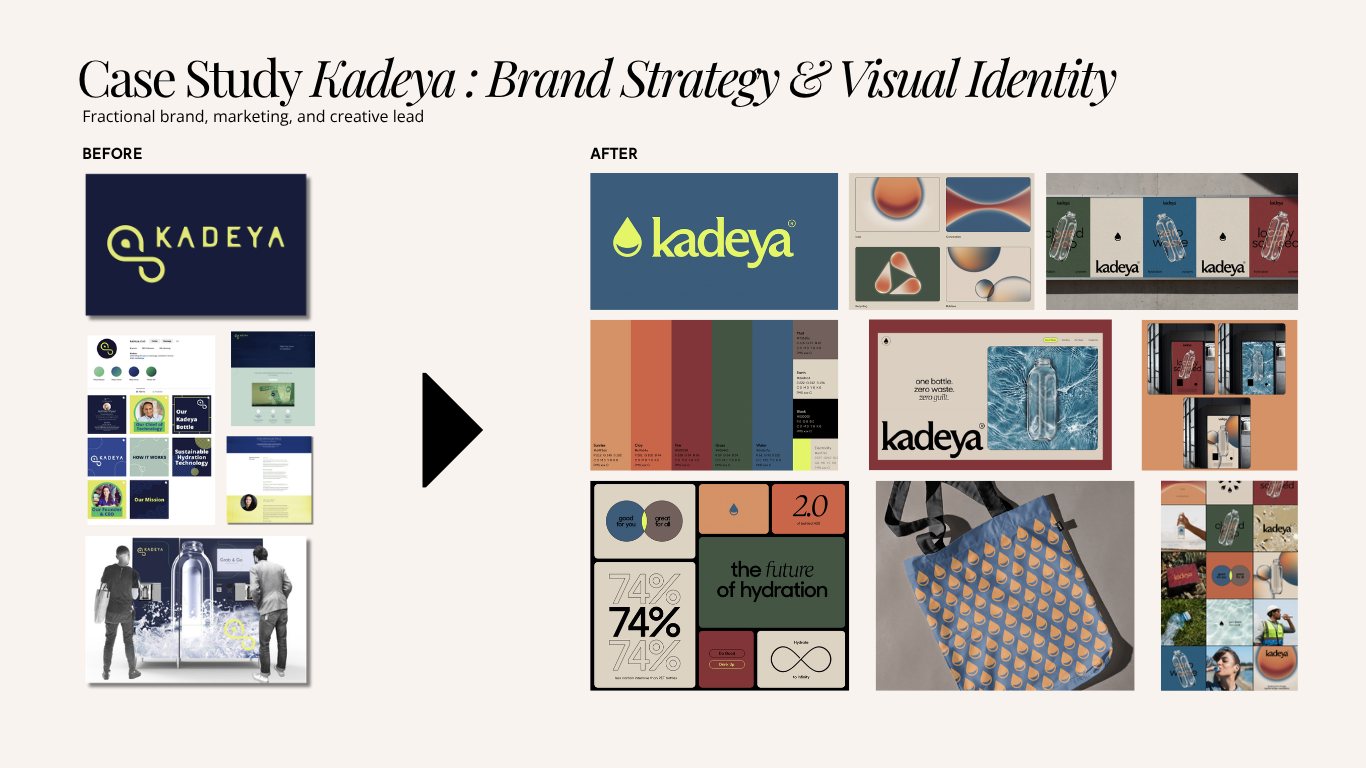
Identity system, before and after
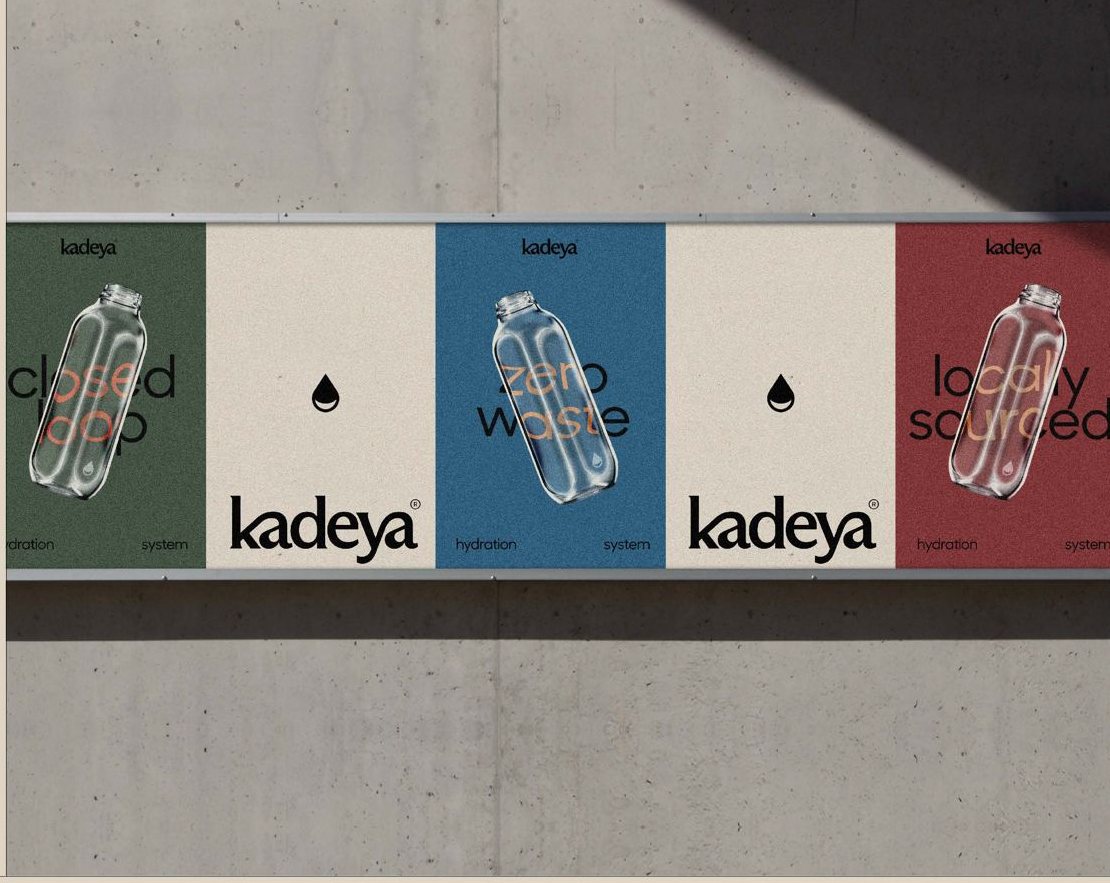
Brand book, hoarding and ads
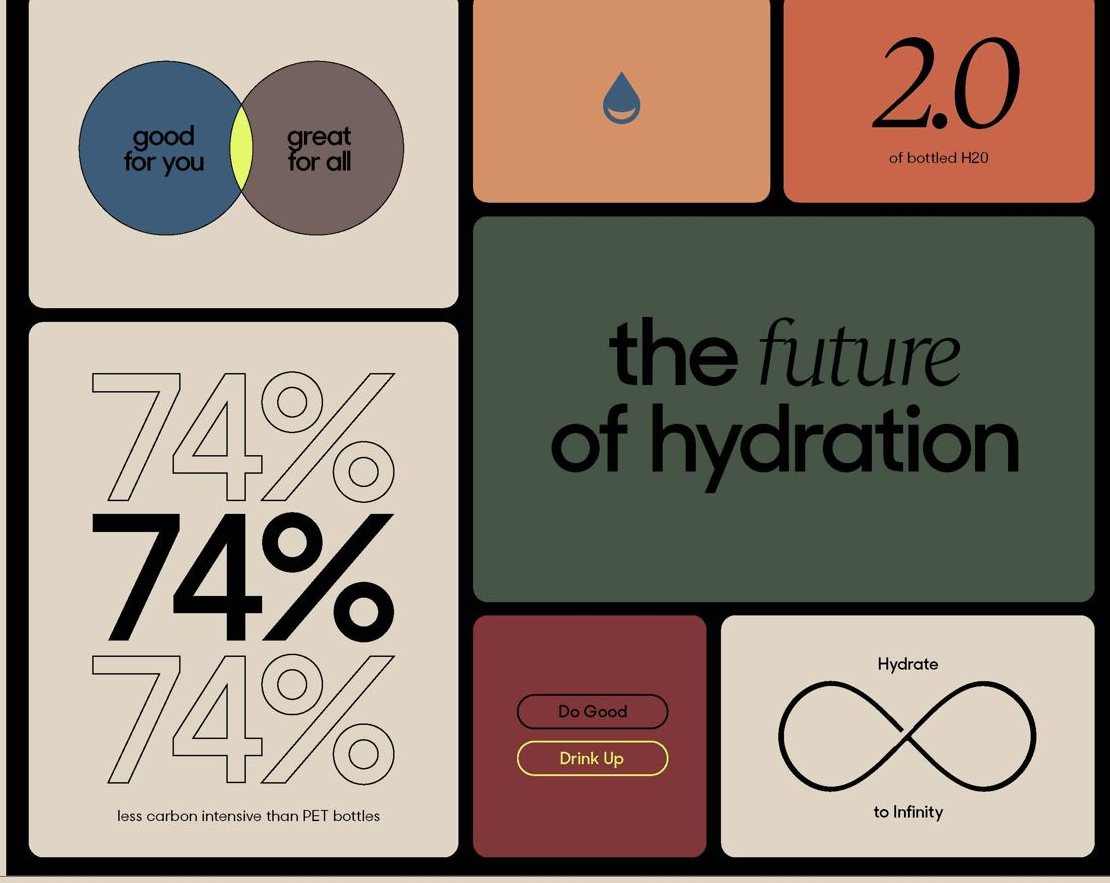
Brand book, colour and type
Identity and brand system built with brand designer Brian Dunn.
What I did
- Took the growth function from a marketing team to a commercial one: demand generation, sales and revenue under a single owner.
- Repositioned the company for construction and manufacturing buyers, and rewrote the ICP the sales team works from.
- Rebuilt the brand from values and purpose up, then identity, tone of voice, and a brand book usable enough that a freelancer can make a correct decision alone.
- Built the RevOps funnel, CRM and customer journeys for both business clients and end users.
- Built lifecycle marketing and a loyalty programme that rewards returning the bottle, turning a station install into recurring behaviour.
- Worked with the product team on the end-user experience across the station and companion app, grounded in research with the people who use them.
- Ran integrated B2B and B2C campaigns end to end, and concepted, shot and edited the photo and video behind them.
- Supported the executive team on fundraising and pitch decks, and raised $1.5M across RUV, Wefunder and direct investor relationships.
Who buys it
Kadeya sells into industrial workplaces and to the food and beverage services companies that run their break rooms. The first eight signed customers between them operate more than 2,200 locations.
Projects inside this role
Four internal AI tools
Knowledge base, quote calculator, proposal builder and a full-funnel campaign dashboard, all built while on parental leave so the team could serve itself.
The $1.5M raise, run as a marketing campaign
A RUV, a Wefunder community round and direct investor relationships, with a ten-episode podcast and a live performance dashboard underneath it.
Lifecycle marketing and the bottle-return loyalty programme
Email, SMS and in-app lifecycle built around the return loop, with rewards for bringing the bottle back. The mechanism that makes the zero-waste model work commercially.
Designing the bottle cap
Research with workers on how a cap is handled with gloved hands mid-shift, then concept work with industrial product designer Joel Williams.
The end-user digital experience
UX and UI across the retail experience, the station kiosk, the mobile app and the corporate portal dashboard, with Brandcave and Innostax.
Designing the station with the people who use it
User-centred design on the hardware and the on-station screens, run with Kadeya’s internal engineering team.
Repositioning and the demand engine
Values-first identity work with brand designer Brian Dunn, a usable brand book, and the funnel underneath.
Featured · designing the station with the people who use it
A user-centred design practice, run on hardware.
This project was about the physical station and the screens on it: where a person reaches, what they touch, what the display does while they wait. I ran it with Kadeya’s internal engineering team, so every finding had somewhere to land.
We started with a blank sheet of paper. On site, with manufacturing workers, I walked each person through an imagined trip to the station: you finish a shift, you want a drink, what happens. Then I asked them to mark on the paper where they would expect to do each action.
Nobody was shown a screen or a rendering first, so nobody was correcting our idea. They were drawing theirs. Those maps set the physical placement of controls and the flow of the on-station screens, worked through six layout iterations against ADA reach and height limits.
It also feeds the loyalty programme two projects down. The return loop only works if returning is easy, and easy was decided here.
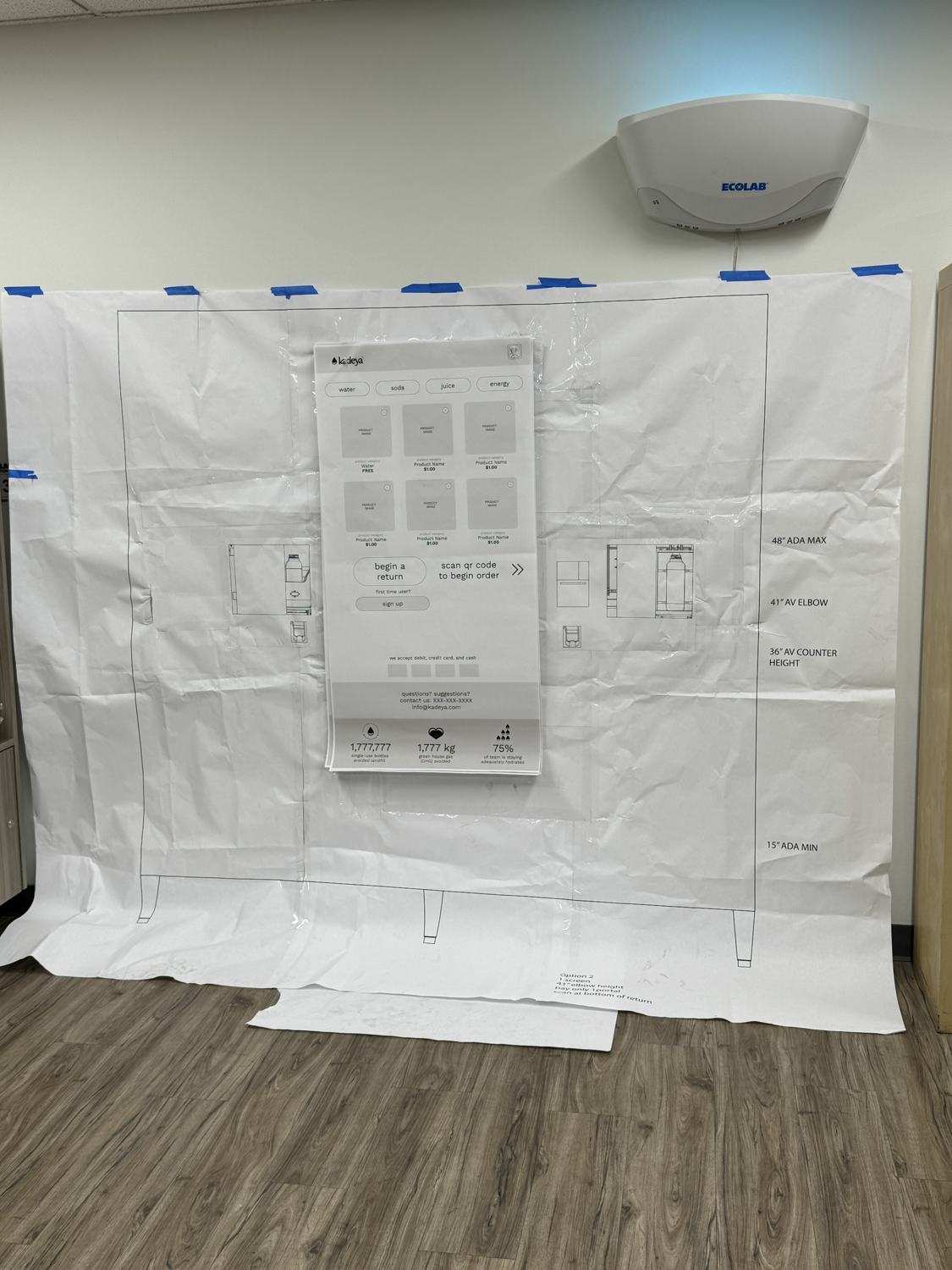
1 · the life-size paper station
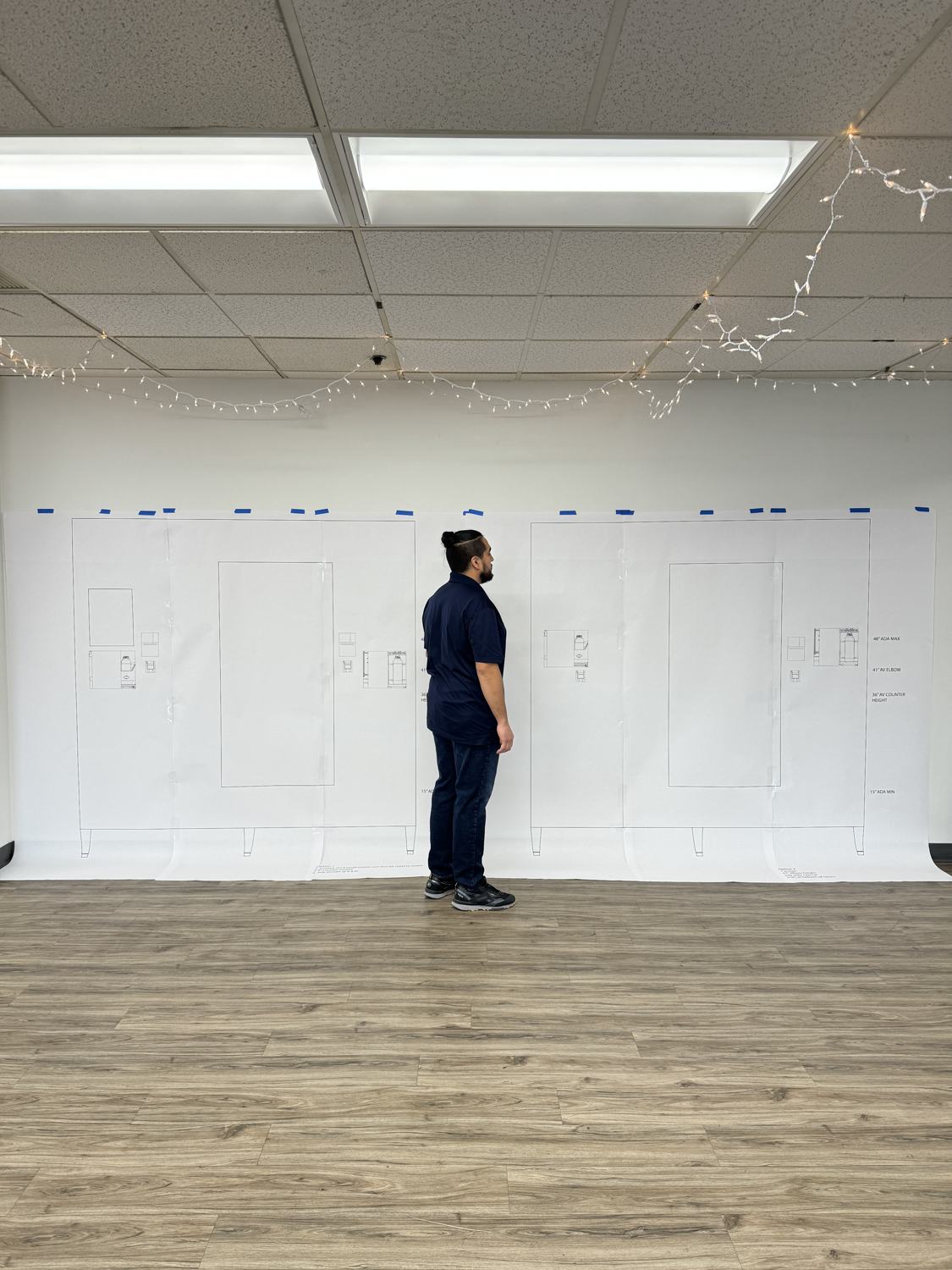
2 · walking a worker through the trip
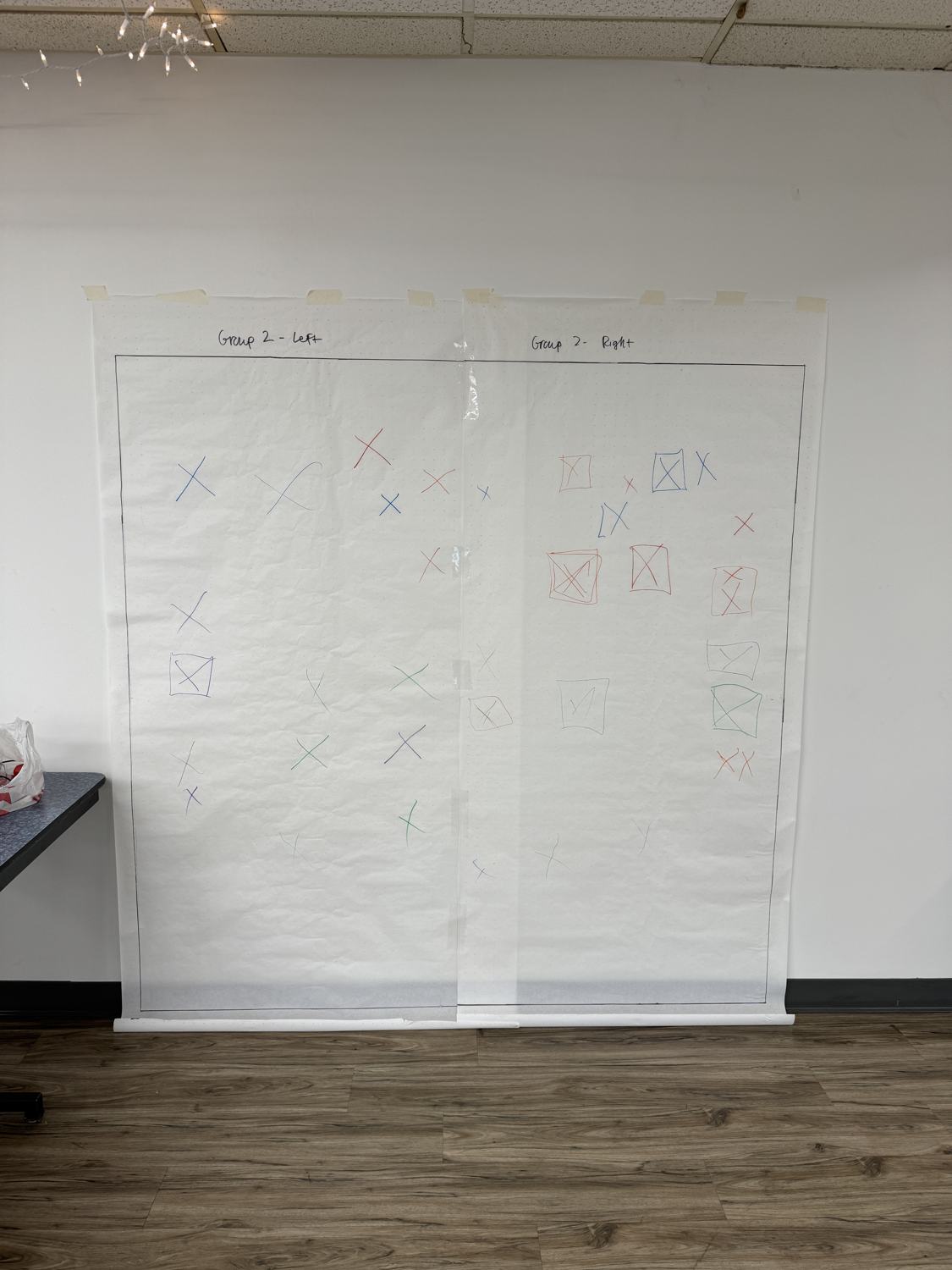
3 · the marked-up map
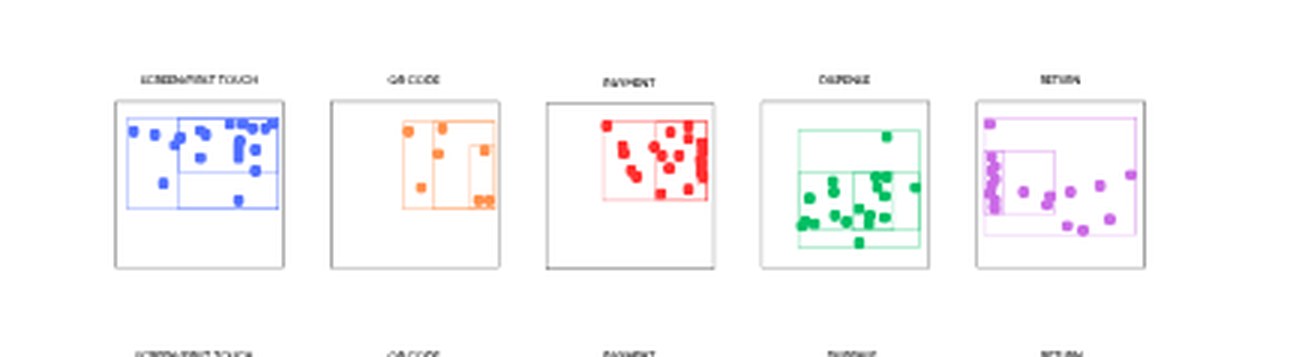
4 · heat mapping the five steps
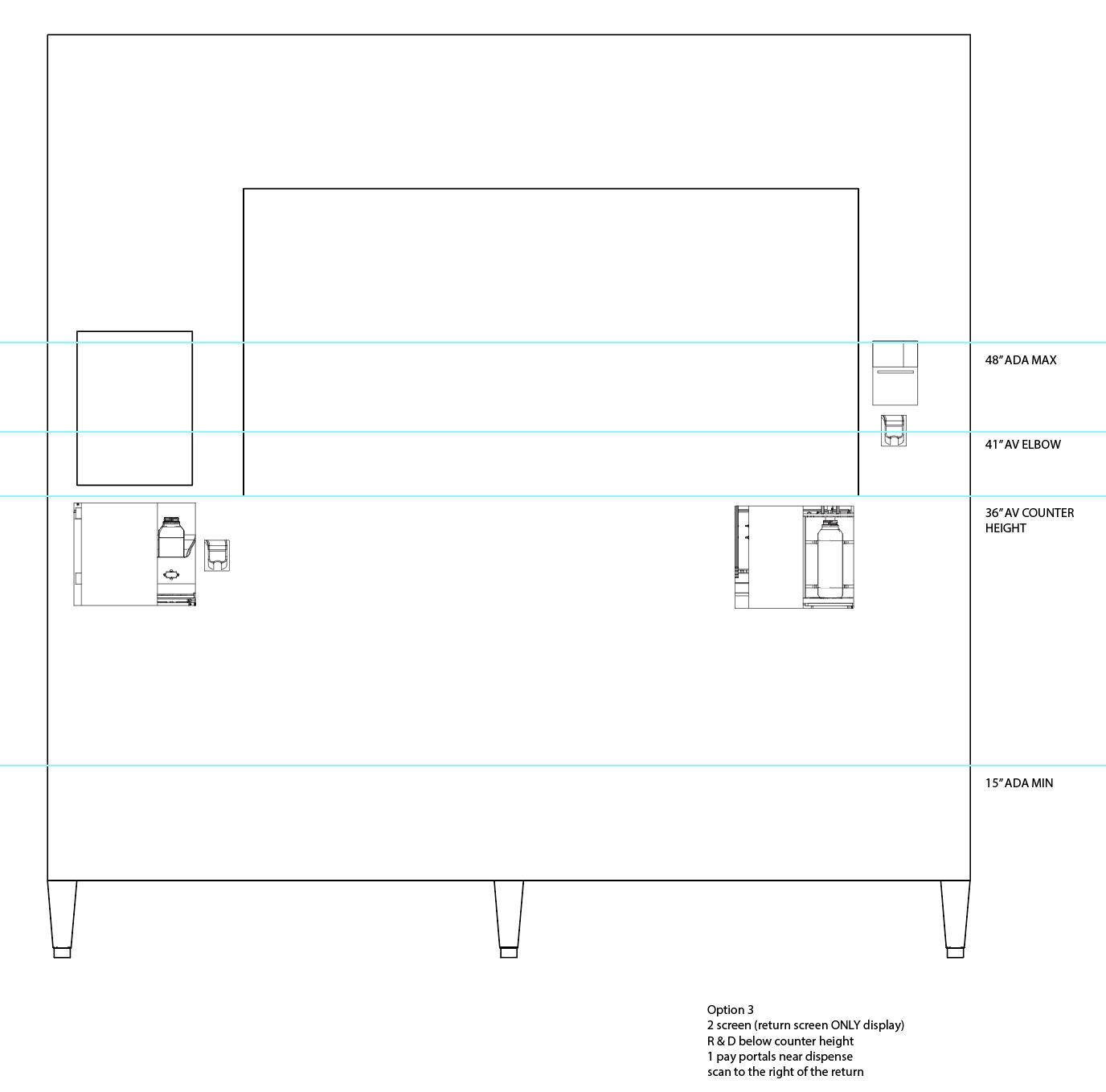
5 · layout iteration, ADA limits
Featured · designing the bottle cap
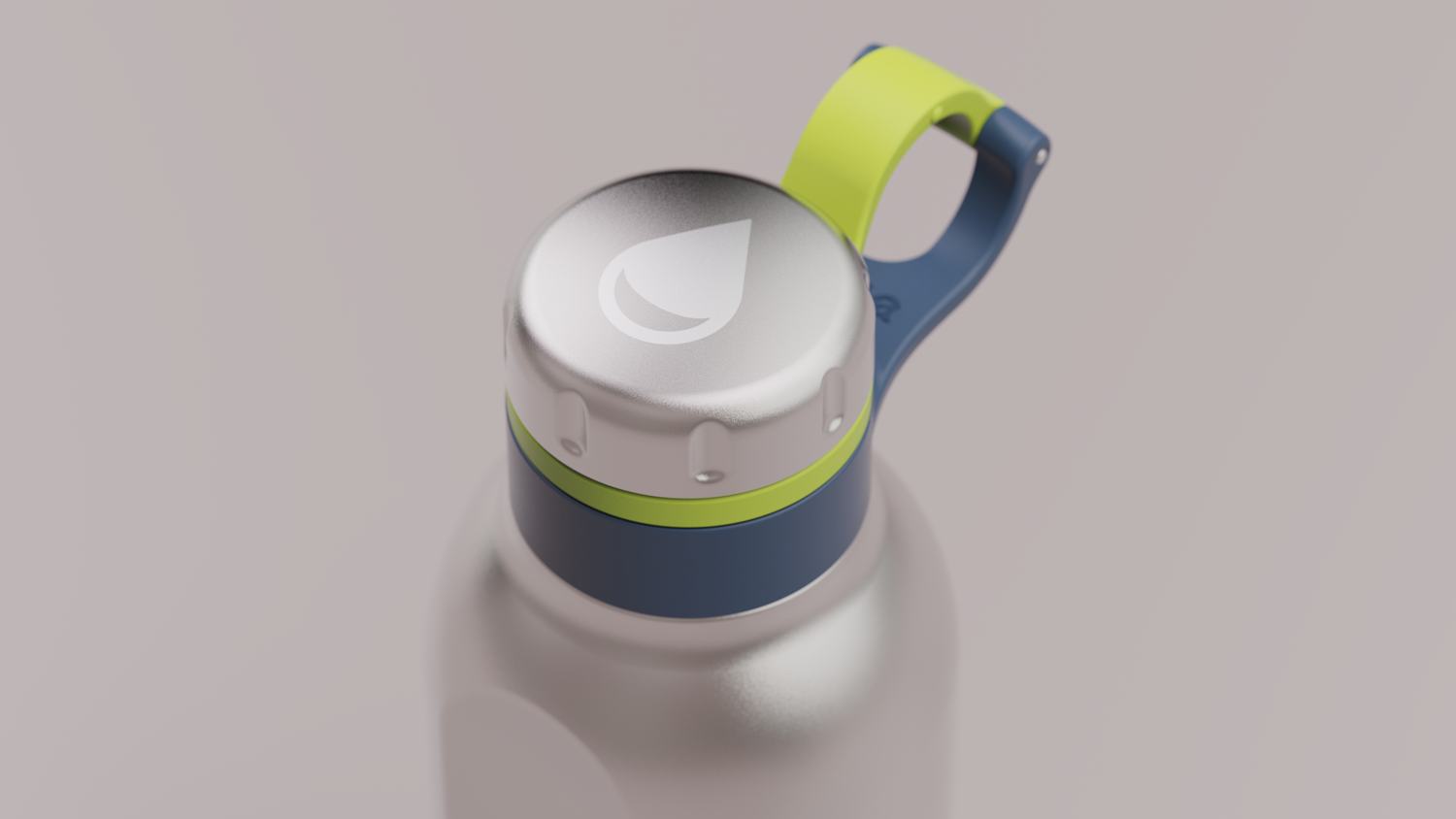
Kadeya already had a bottle. The open question was the cap, so I ran the same method on it: in-person sessions with manufacturing and construction workers about how a cap actually gets handled in their environment. Gloved hands. A work bench with no free surface. One hand busy. A shift where you put the bottle down twenty times and need to know which one is yours when you come back, which is why we tested randomising colour per person per day.
Those findings became the brief. I worked through multiple concepts to the final design with industrial product designer Joel Williams.
The bottle is not packaging, it is the interface. Each one carries a code that ties it to the person holding it, which is what makes the return loop work and what turns a drink into something the company can respond to: personalised, measurable, and open to engagement long after the vend.
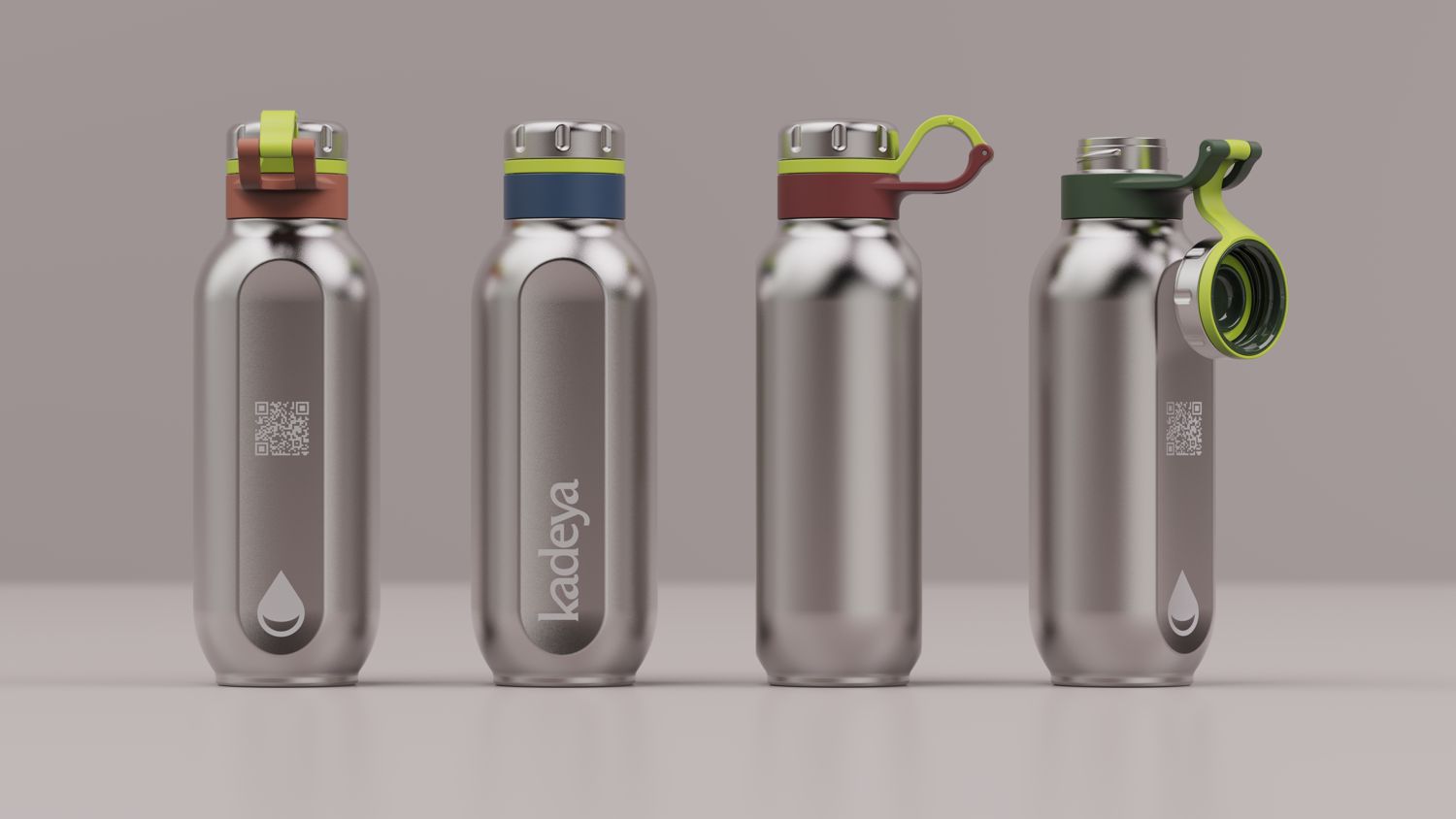
The bottle, final design
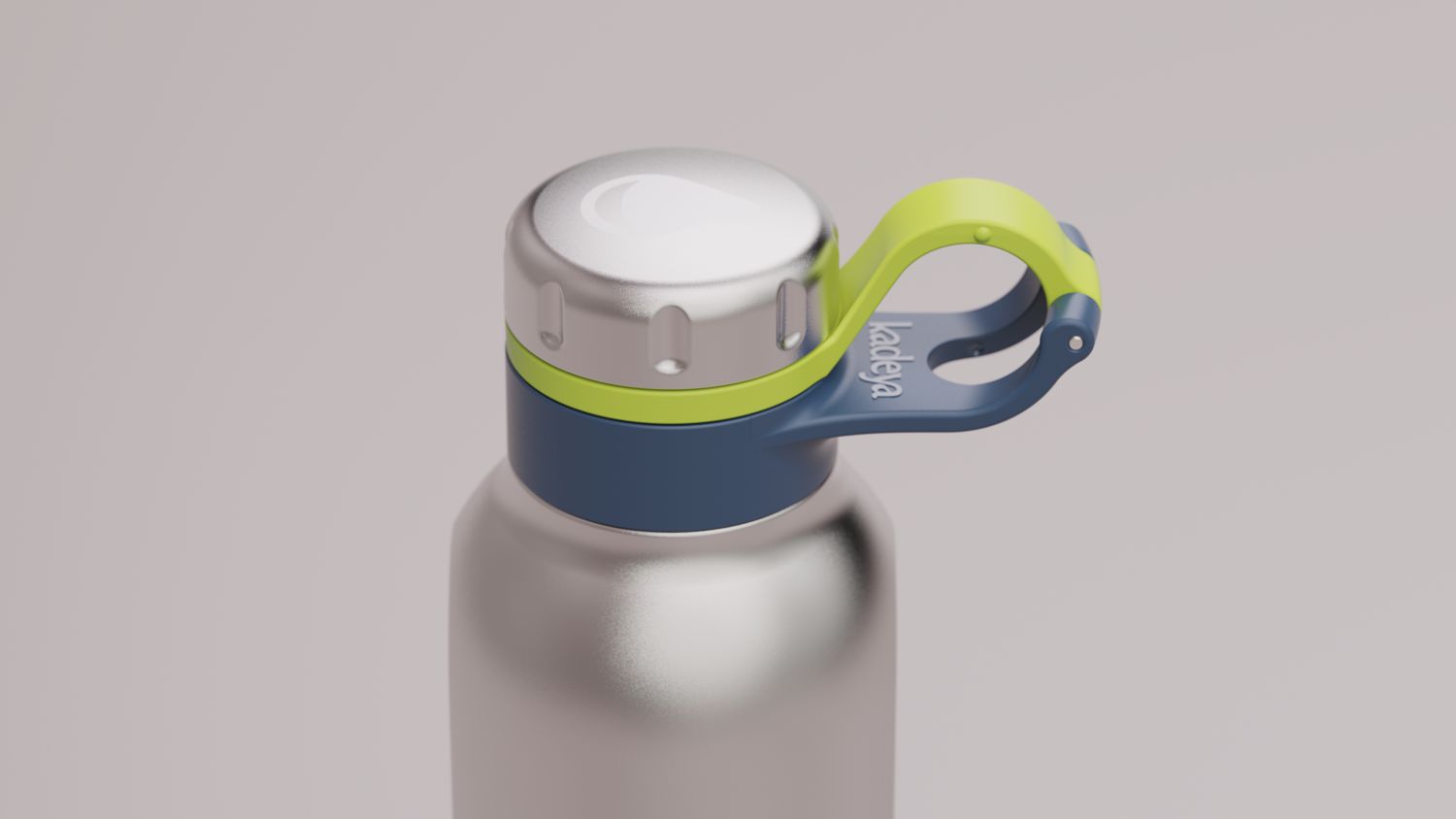
The droplet, hidden in the hinge
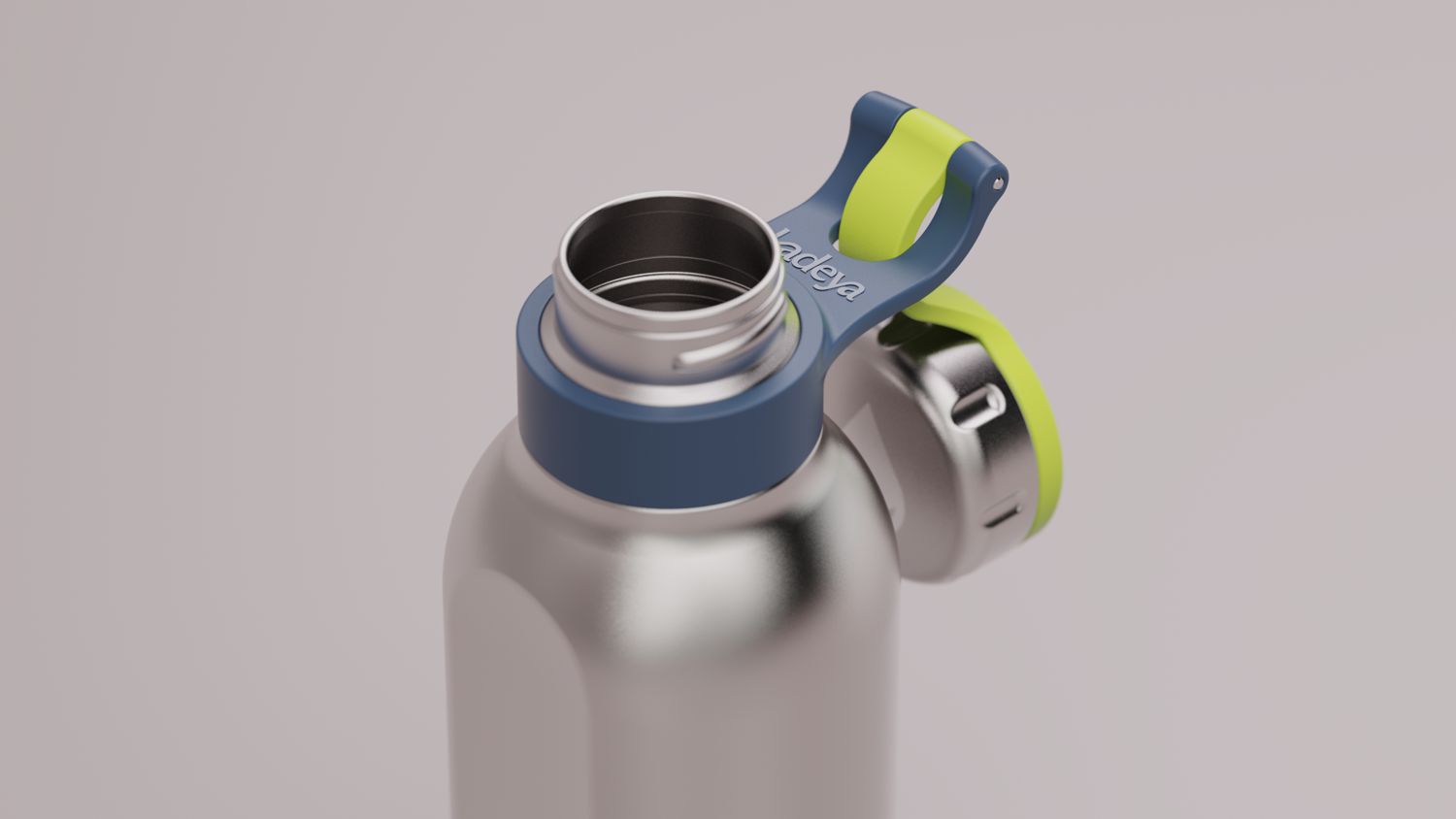
Open, cap tethered
Cap detail
Featured · the end-user digital experience
One person, four surfaces, one account.
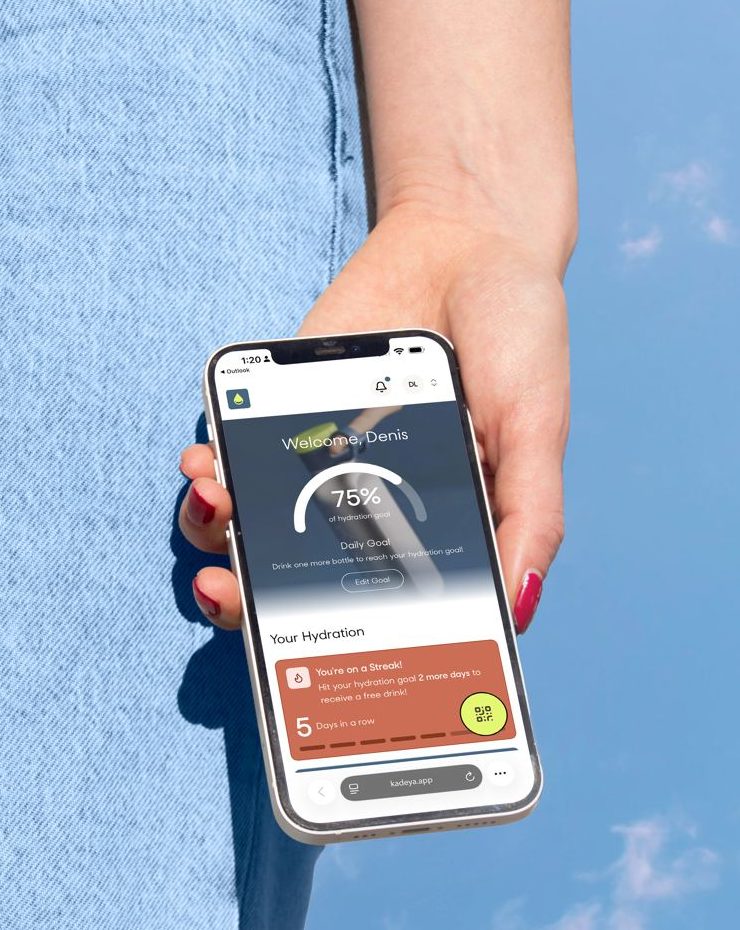
Separate from the hardware work, this was the UX and UI of the digital experience end to end: the retail experience, the kiosk on the station, the mobile app a worker carries, and the corporate portal dashboard the customer logs into. Four surfaces that have to feel like one product and one account.
This is where the beverage retail experience gets digitized. Every vend, every return and every preference becomes something the company can see and respond to, instead of a transaction that disappears the moment the bottle leaves the machine.
Built with Brandcave and Lorenzo Sozzi on design and Innostax on engineering, against research from the people who actually stand at the machine.
User app
Featured · the $1.5M raise, run as a marketing campaign
Most seed rounds are run as a sales process. I ran this one as a campaign.
$1.5M across a RUV, a Wefunder community round and direct angel and VC relationships. The strategy was to build an audience before asking it for anything: segment the investor base the way you would a customer base, give each segment a reason to pay attention, and make the company legible before the pitch.
The engine was a ten-episode original podcast, produced in house and cut down into short-form across the funnel: top-of-funnel awareness, mid-funnel credibility with operators and press, and bottom-of-funnel proof for investors already in conversation. One production, three jobs.
Underneath it I built a full-funnel campaign dashboard so the team could see what was working without asking me. Channel performance, funnel stage and contribution in one view, updating live.
The round closed. The more useful outcome is that the content and the dashboard both outlived it and now run the commercial funnel.
$1.5M raised across RUV, Wefunder and direct investor relationships
In their words
“She started with a deep dive into our values as a company and our customer strategy. From there, she crafted a brand strategy that has increased our overall inbound lead generation by about 300%.”
Bridget Nyland, Director of Growth
“Her work consistently exceeds expectations, elevates standards, delivers delight, and somehow, she does it all seemingly effortlessly, with joy and ease.”
Manuela Zoninsein, CEO & Founder
Press from this work
Kadeya feature
Forbes
Kadeya feature
Fast Company
Broadcast segment
CBS Chicago
Air Force work
Chicago Inno